
Summer Games: Previous | Next
Return to main page / index of medals.
Return to Eric Holcomb Company home page.
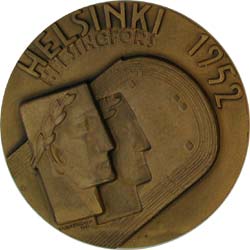
1952 SUMMER OLYMPIAD
HELSINKI, FINLAND
DESCRIPTION
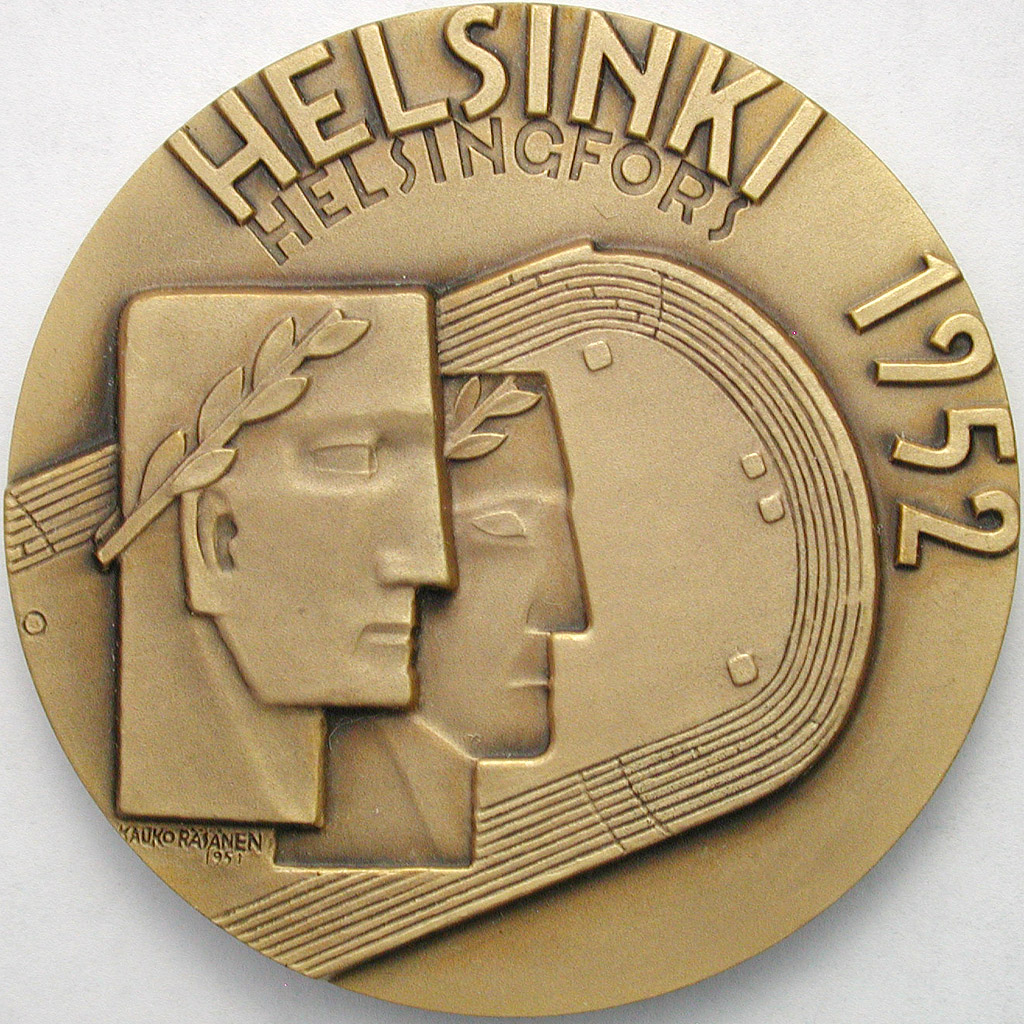
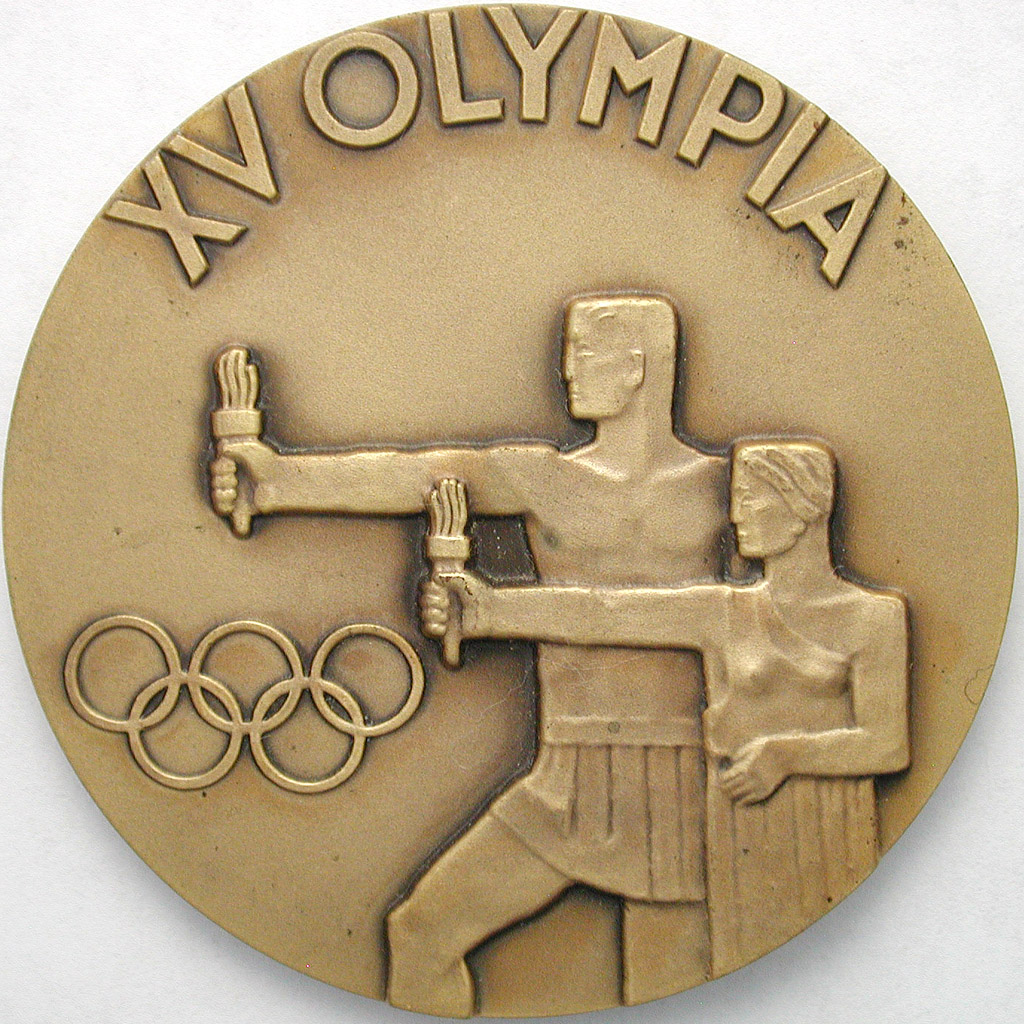
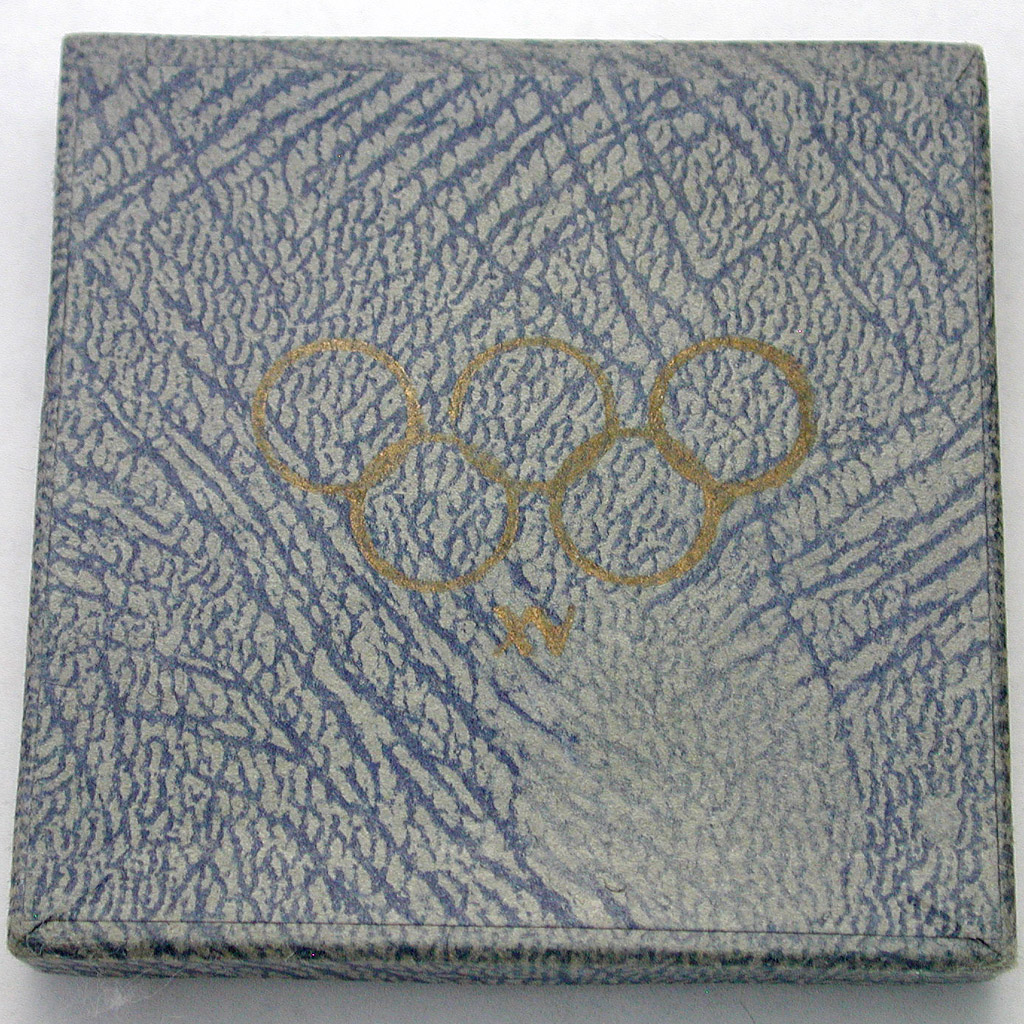
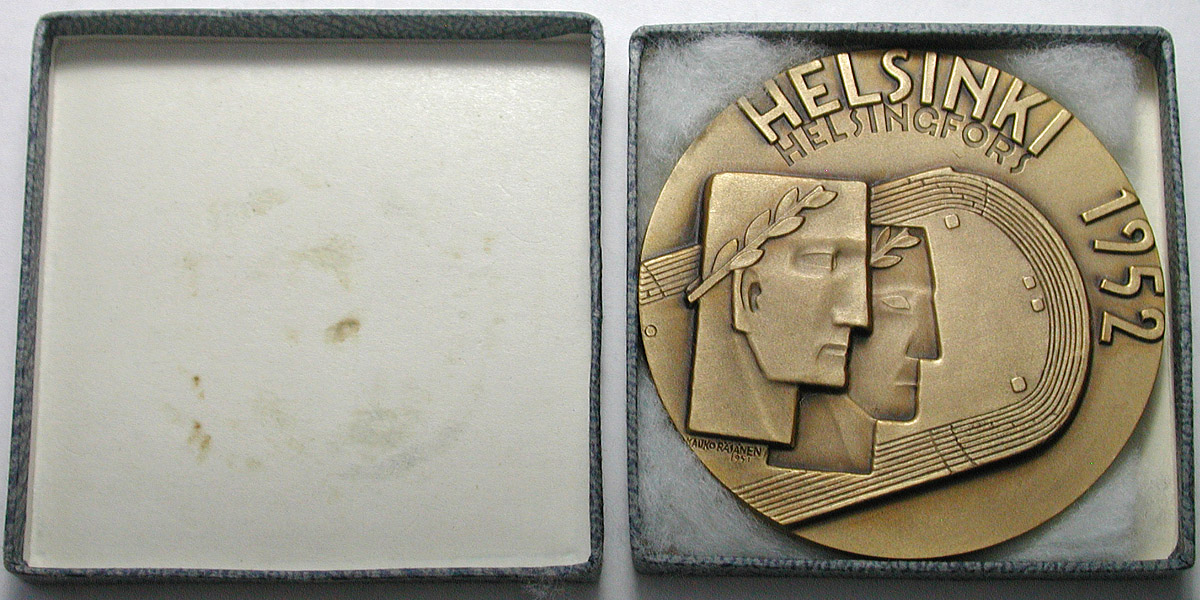
An art-deco rendition of a couple athlete's heads with laurel crowns super-imposed over the Olympic stadium. The reverse depicts similar-stylized athletes holding torches with the Olympic rings to the right and the legend XV OLYMPIA along the top edge. The medal was presented in a light-blue box with the Olympic rings on its cover.
THE GAMES
The 1952 Helsinki Games began dramatically as Paavo Nurmi, now 55 years old, carried the torch into the stadium and handed it to Hannes Kolehmainen, now 62, who lit the cauldron. It seemed appropriate that the most impressive achievements in Helsinki should be those of another long-distance runner, Emil Zatopek of Czechoslovakia, who became the only person in Olympic history to win the 5000, 10,000 and marathon at the same Olympics. The Soviet Union entered the Olympics for the first time. Although their athletes were housed in a separate village, warnings that Cold War rivalries would lead to clashes proved unfounded. Particularly impressive were the Soviet women gymnasts who won the team competition easily, beginning a streak that would continue for forty years until the Soviet Union broke up into separate republics. One of the first women allowed to compete against men in the equestrian dressage was Lis Hartel of Denmark. Despite being paralyzed below the knees after an attack of polio, Hartel, who had to be helped on and off her horse, won a silver medal. Lars Hall, a carpenter from Sweden, became the first nonmilitary winner of the modern pentathlon. Back in 1924, Bill Havens had been chosen to represent the United States in coxed eights rowing, but declined in order to stay home with his wife, who was expecting their first child. Twenty-eight years later, that child, Frank Havens, won a gold medal in the Canadian singles 10,000m canoeing event.
Additional Photos