
Summer Games: Previous | Next
Return to main page / index of medals.
Return to Eric Holcomb Company home page.
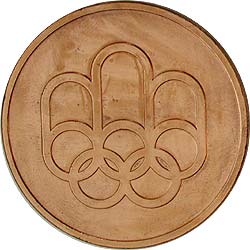
1976 SUMMER OLYMPIAD
MORTREAL (Quebec), CANADA
DESCRIPTION
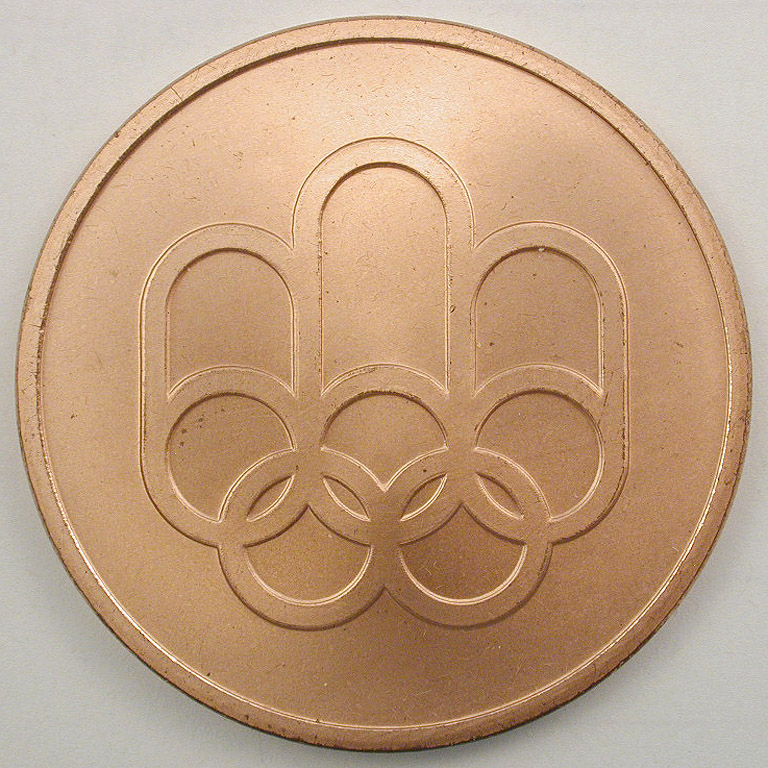
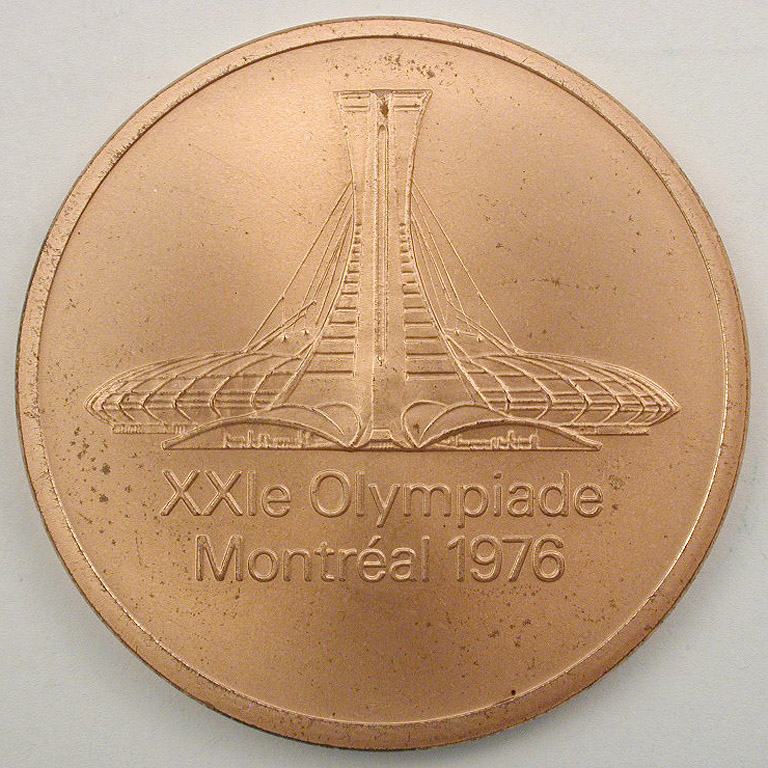
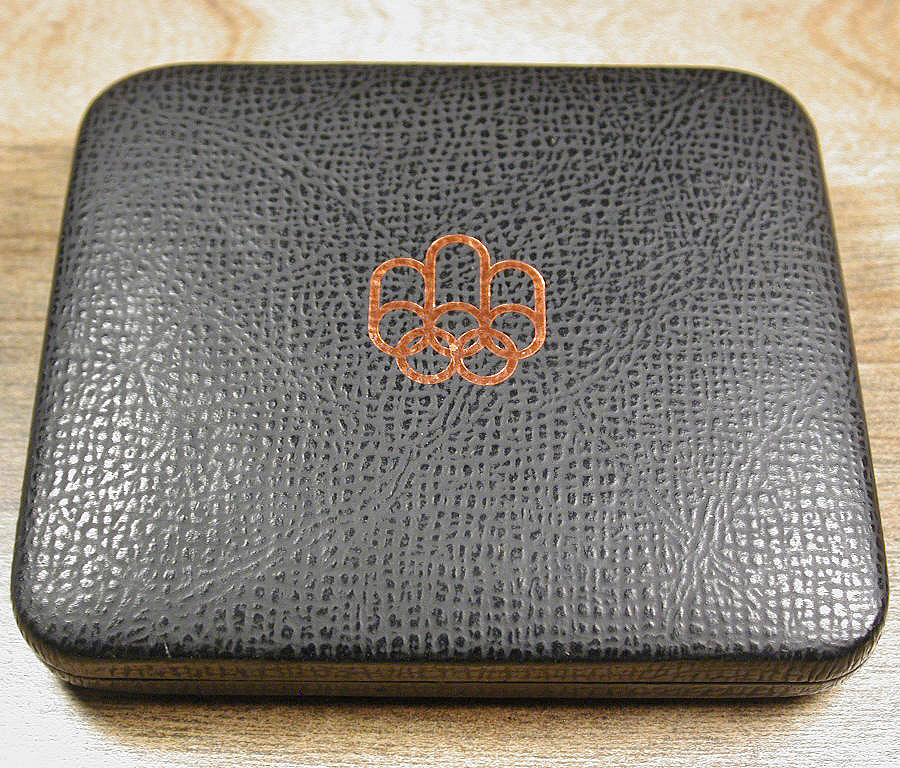
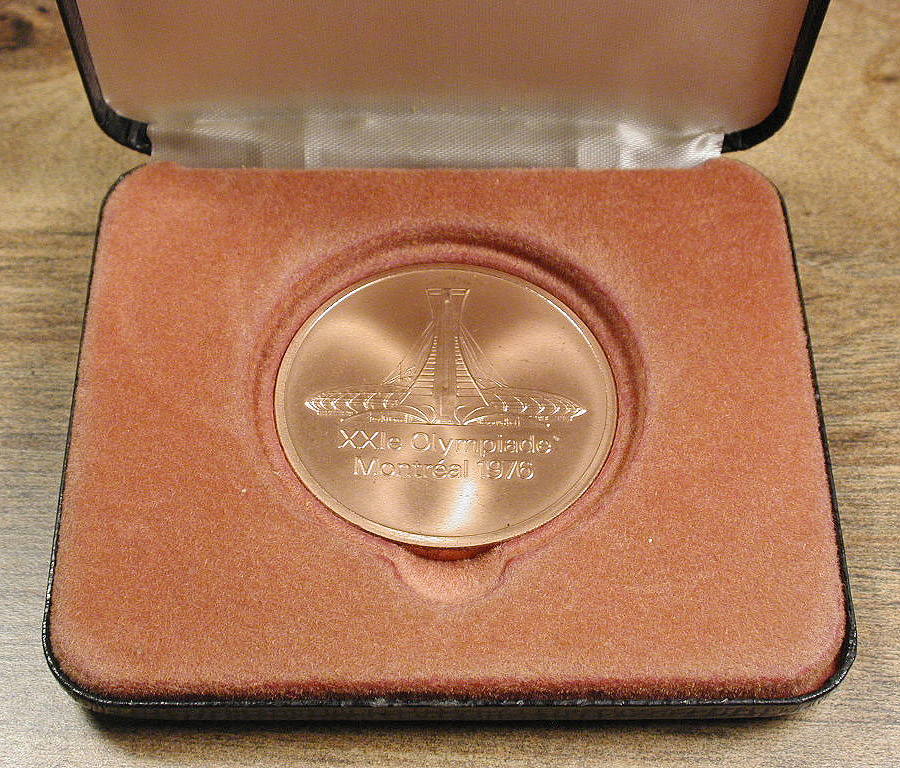
The obverse depicts a stylized "M" incorporated into the Olympic emblem while the reverse displays a rendition of the Montreal Olympic stadium above the legend, XXIe Olympiade Montreal 1976. The medal was presented in a black cardboard box containing a leather case embossed with the Montreal Olympic emblem.
THE GAMES
The 1976 Montreal Games were marred by an African boycott to protest the fact that the national rugby team of New Zealand had toured South Africa and New Zealand was scheduled to compete in the Olympics. Women's events were included for the first time in basketball, rowing and team handball. Fourteen-year-old gymnast Nadia Comaneci of Romania caused a sensation when, for her performance on the uneven bars, she was awarded the first-ever perfect score of 10. She eventually earned seven 10.0s. On the men's side, Japan's Shun Fujimoto broke his leg while completing his floor exercises routine. The Japanese team was engaged in a close contest with the Soviet Union, so Fujimoto kept his injury secret. But when he dismounted from the rings, he dislocated his knee and was forced to withdraw. The Japanese women's volleyball team won all their matches in straight sets, and in only one of fifteen games did an opponent score in double figures. Individual stars included Klaus Dibiasi of Italy, who won his third straight gold medal in platform diving; Viktor Saneyev of Soviet Georgia, who won his third triple jump gold; and Irena Szewinska of Poland, winner of the 400m run, who brought her career total to seven medals - in five different events. Alberto Juantorena of Cuba put together the first 40m-800m double victory. Miklos N'meth of Hungary won the javelin throw to become the first son of an athletics gold medalist to win a gold of his own. His father, Imre, had won the hammer throw in 1948. Clarence Hill of Bermuda earned a bronze medal in boxing's super-heavyweight division to give Bermuda the honor of being the least populous nation (53,500) ever to win a medal in the Summer Olympics.
Additional Photos