
Summer Games: Previous | Next
Return to main page / index of medals.
Return to Eric Holcomb Company home page.
1960 SUMMER OLYMPIAD
ROME, ITALY
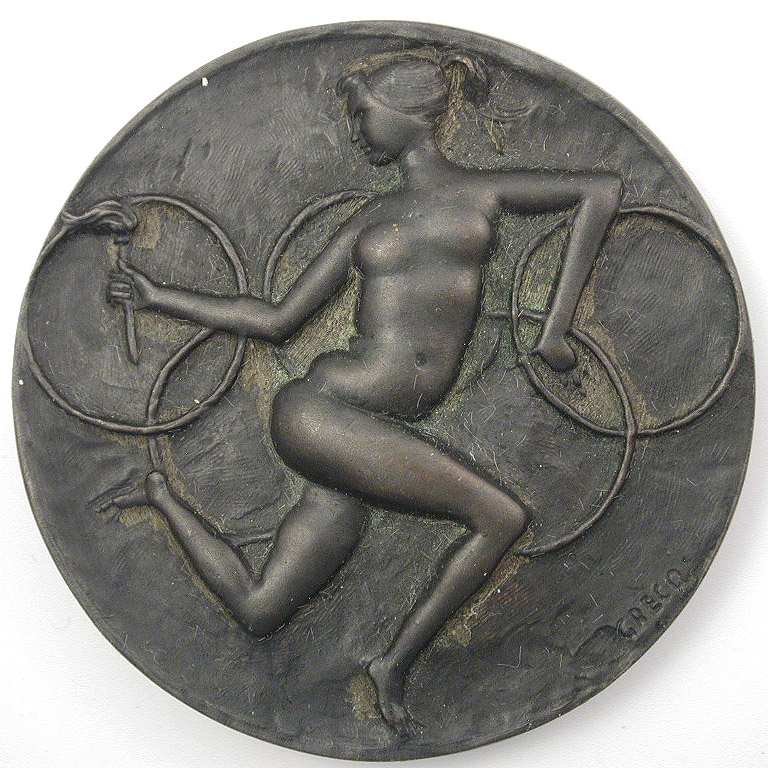
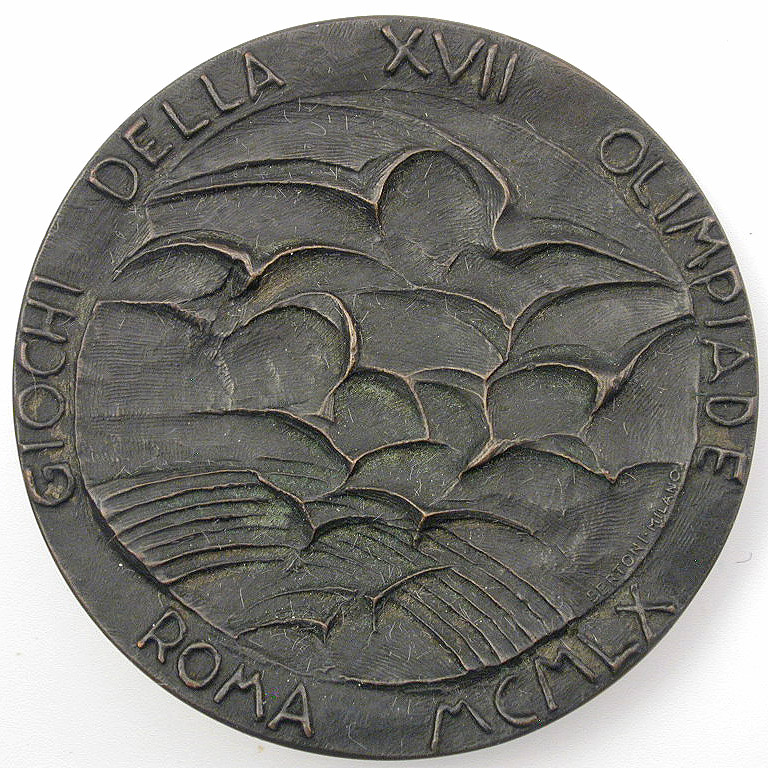
DESCRIPTION
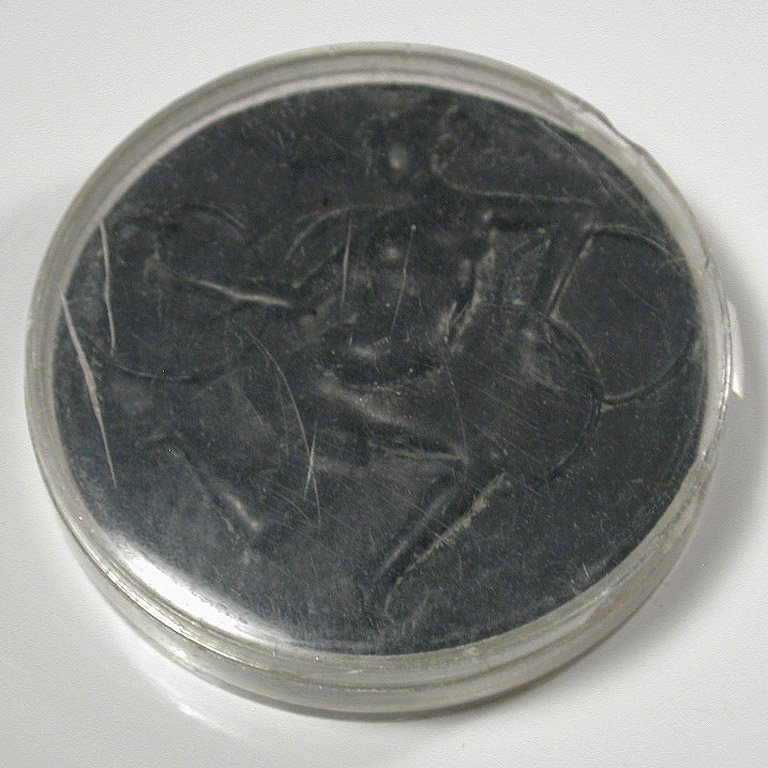
A nude female torchbearer is superimposed over the Olympic rings. The obverse also bears the name of the designer along the lower right rim. The reverse displays a number of eagles in flight over Rome stadium with the Italian legend GIOCHI DELLA XVII OLIMPIADE ROMA MCMLX. The medals were presented in a clear plastic case with a white paper insert with the name and address of the Manufacturer, BERTONI of MILAN.
THE GAMES
Fifty-four years after Italy had to give up hosting the Olympics, Rome finally got its chance. They made the most of their dramatic history, holding the wrestling competition in the Basilica of Maxentius, site of wrestling contests 2000 years earlier. Among the other ancient sites that were used were the Caracalla Baths (gymnastics) and the Arch of Constantine (finish of the marathon). Paul Elvstrom of Denmark won the gold medal in Finn class yachting - for the fourth consecutive time. Hungarian fencer Aladar Gerevich earned his sixth consecutive gold medal in the team sabre event. In canoeing, Sweden's Gert Fredricksson won his sixth gold medal. Yugoslavia, which qualified for the semi-final by winning a coin toss, won the football tournament after losing in the final three times in a row. Sante Gaiardoni of Italy became the only cyclist in Olympic history to win both the time trial and the match sprint events. By winning the silver medal in light-welterweight boxing, Ike Quartley of Ghana became the first black African Olympic medalist. Five days later in the marathon, Abebe Bikila, running barefoot, outlasted Rhadi Ben Abdesselem of Morocco to become the first black African Olympic champion. Rafer Johnson and C.K. Yang were decathlon training partners at UCLA, but in Rome Johnson represented the United States and Yang represented Taiwan. In a dramatic finish, they took first and second places and then, exhausted, fell against each other for support. Suffering from concussion and a broken collarbone after a fall in the three-day equestrian event, Bill Roycroft left his hospital bed to compete in the jumping event and ensure the gold medal for Australia.
Additional Photos